Help Remove Hundreds of Abandoned Tires from Maine's Rivers
Help Remove Hundreds of Abandoned Tires from Maine's Rivers
My name is Brandon Bichrest, and I am a Master Maine Fishing Guide on the Androscoggin and Kennebec Rivers.
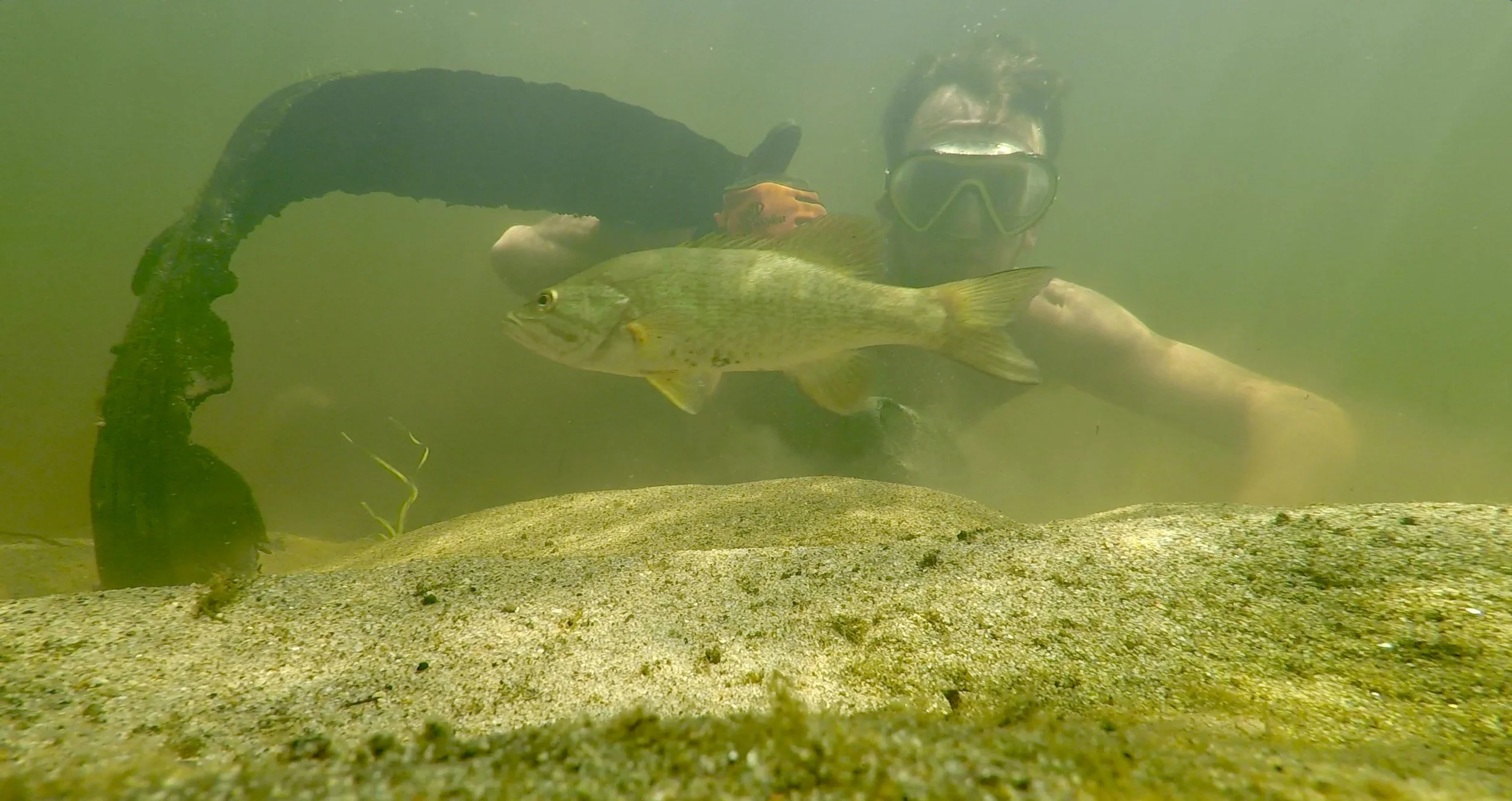
For years, while guiding thousands of clients from across the United States and around the world, I've seen something that most people never notice beneath the surface—hundreds, and in some areas thousands, of old tires resting on the river bottom.
For decades, these tires have been part of the landscape. Many were discarded during the 1950s through the 1970s, when our rivers were heavily polluted. At that time, tires were also widely used throughout North America as artificial fish habitat because it was believed they would benefit fisheries while helping solve the growing tire disposal problem.
Years later, research found that tires can break down in aquatic environments, releasing chemicals that may negatively affect water quality and aquatic life. Many artificial tire reef projects have since been removed after proving ineffective or environmentally harmful.
Today, more than 50 years after the Clean Water Act, Maine's rivers have made an incredible recovery. The water runs clear, eagles soar overhead, native vegetation grows along the banks, and the rivers support outstanding fisheries.
But beneath that healthy-looking water, thousands of old tires still remain.
In many places, these tires are piled together across large sections of river bottom. They trap sediment, prevent the riverbed from naturally shifting during floods, and create areas where natural vegetation struggles to establish itself.
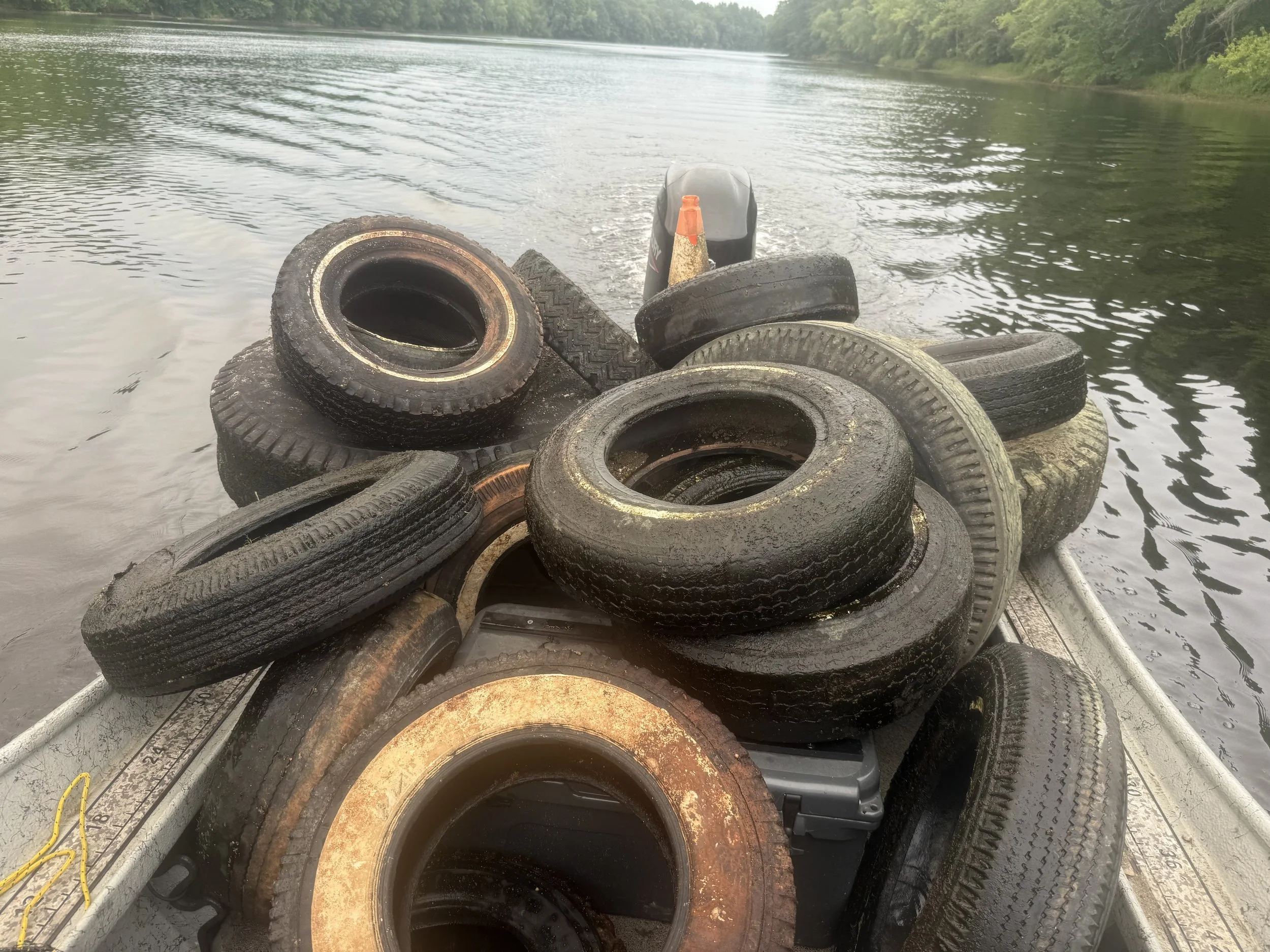
In June 2025, I decided to remove a few tires just to see what it would take. I pulled out nine that first day.
One of the first questions people asked was:
"Why are you removing fish structure?"
That question led me to research the environmental impacts of tires in rivers and lakes. I found numerous studies documenting concerns about tire chemicals entering the water and their effects on aquatic ecosystems. The more I learned, the more convinced I became that these tires didn't belong in Maine's rivers.
So I kept going.
After removing 200 tires, I realized the problem was far larger than I had imagined. That's when I started this fundraiser to help cover the time, fuel, equipment, boat expenses, and transporting.
The response has been incredible.
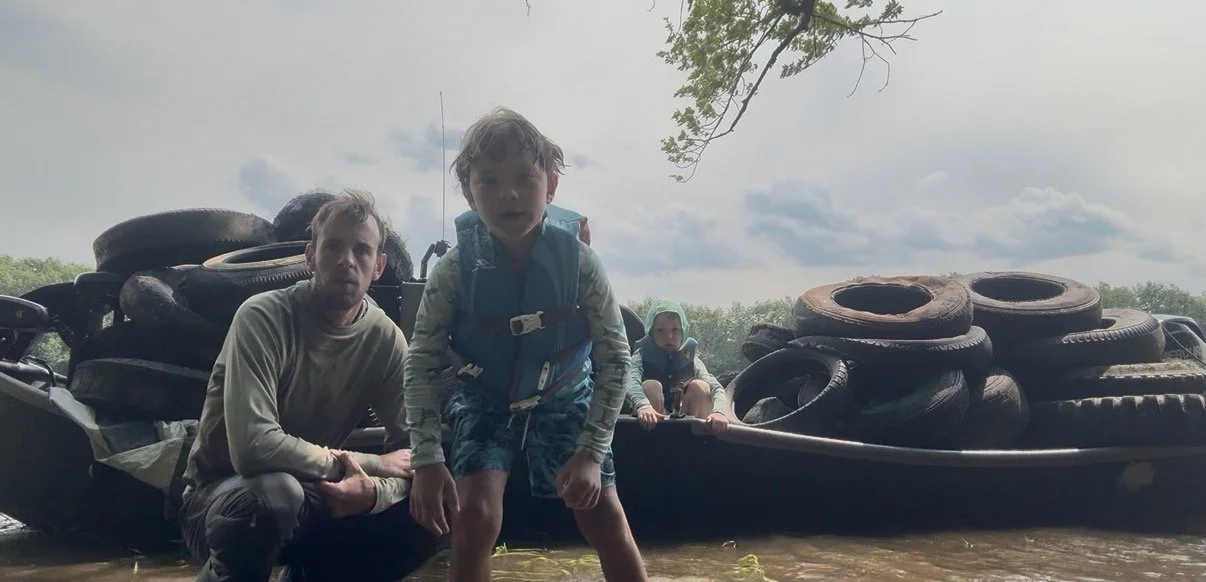
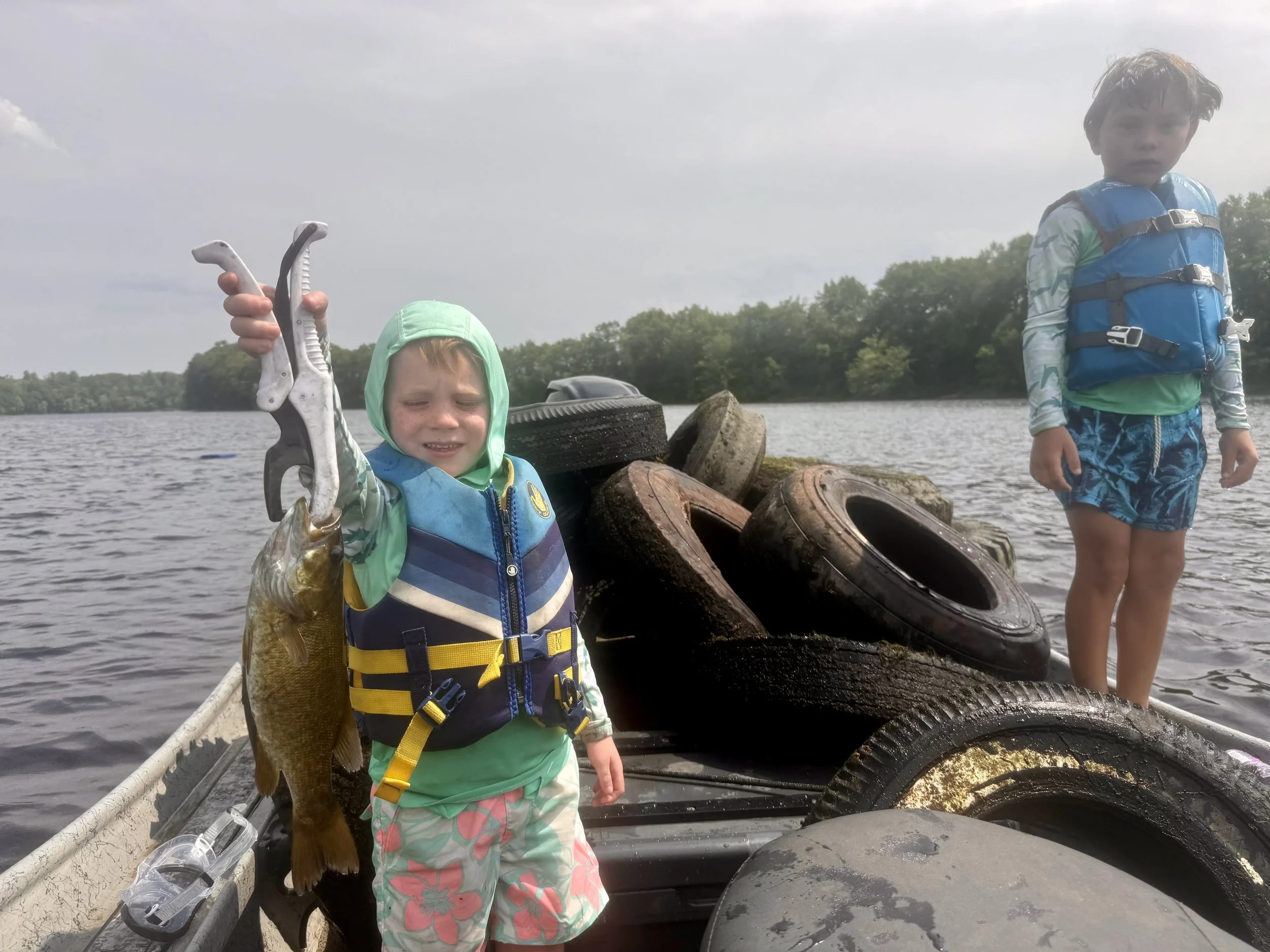
In less than a year, supporters have contributed over $4,500, allowing me to continue this work between my guided fishing trips. My two children, ages 6 and 8, have even joined me on many of these clean-up days, learning firsthand the importance of taking care of our natural resources.
As of today, we have removed:
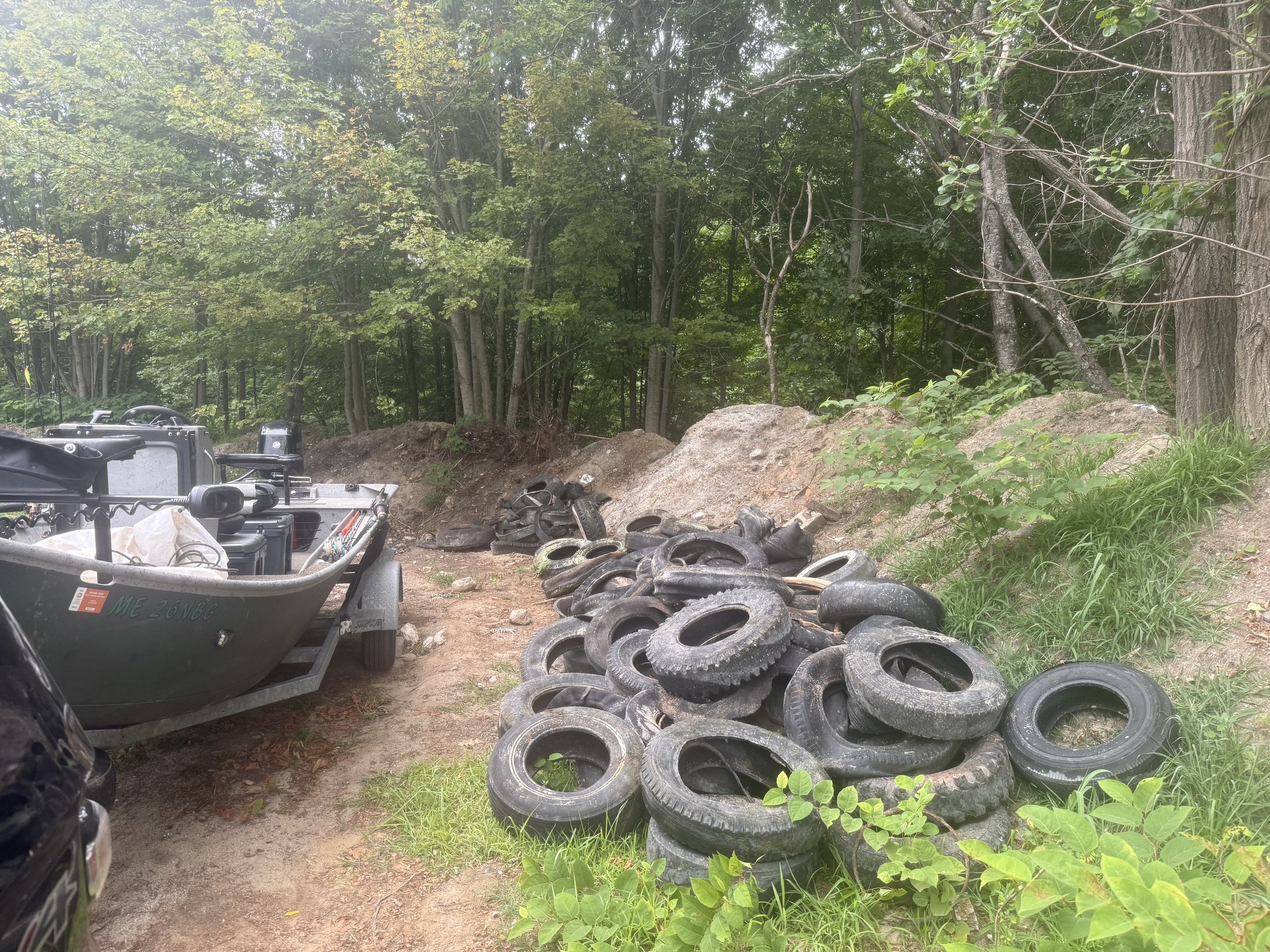
524 tires total
Androscoggin River: 478
Kennebec River: 41
Small tributaries to the Androscoggin: 5
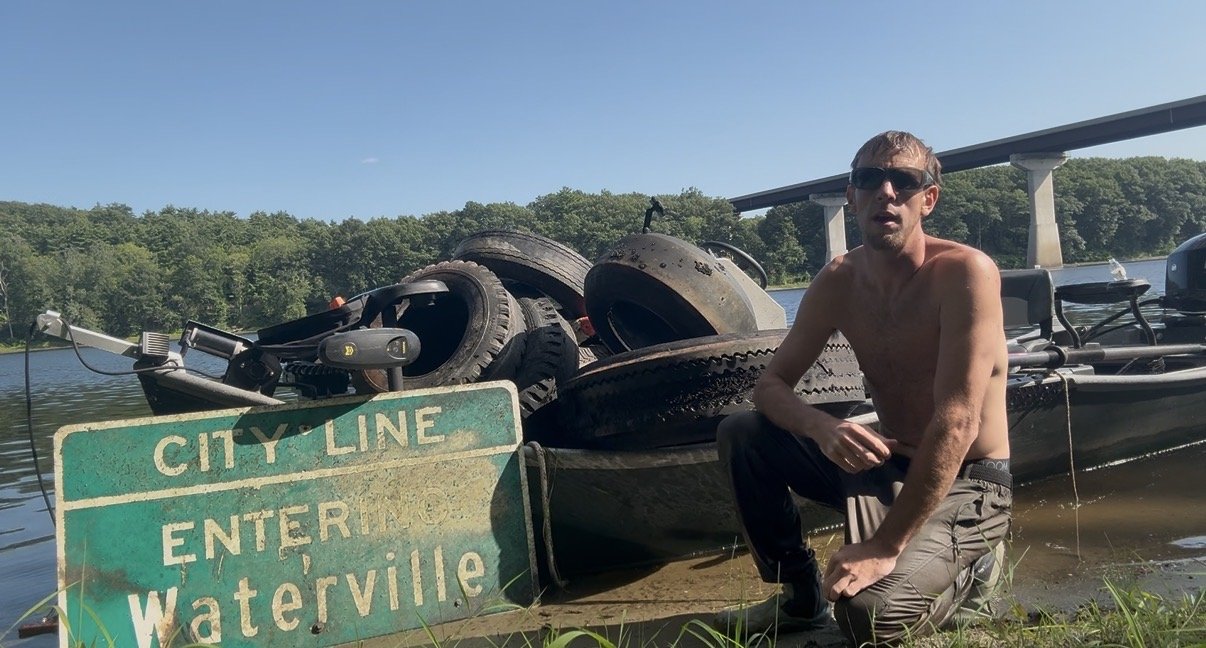
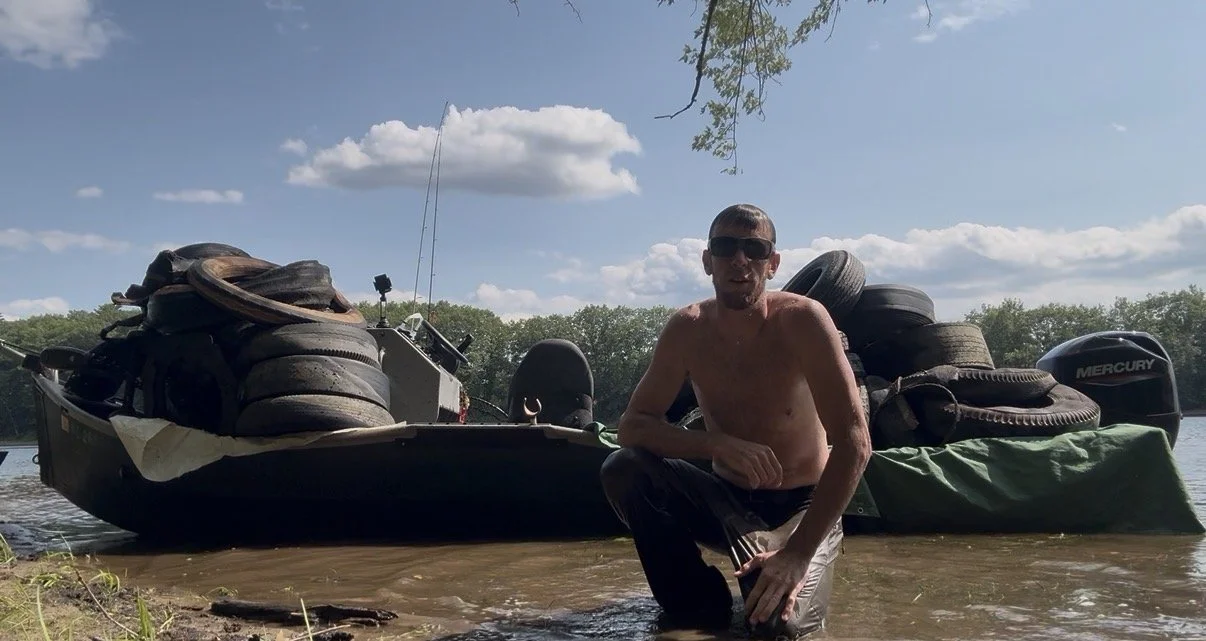
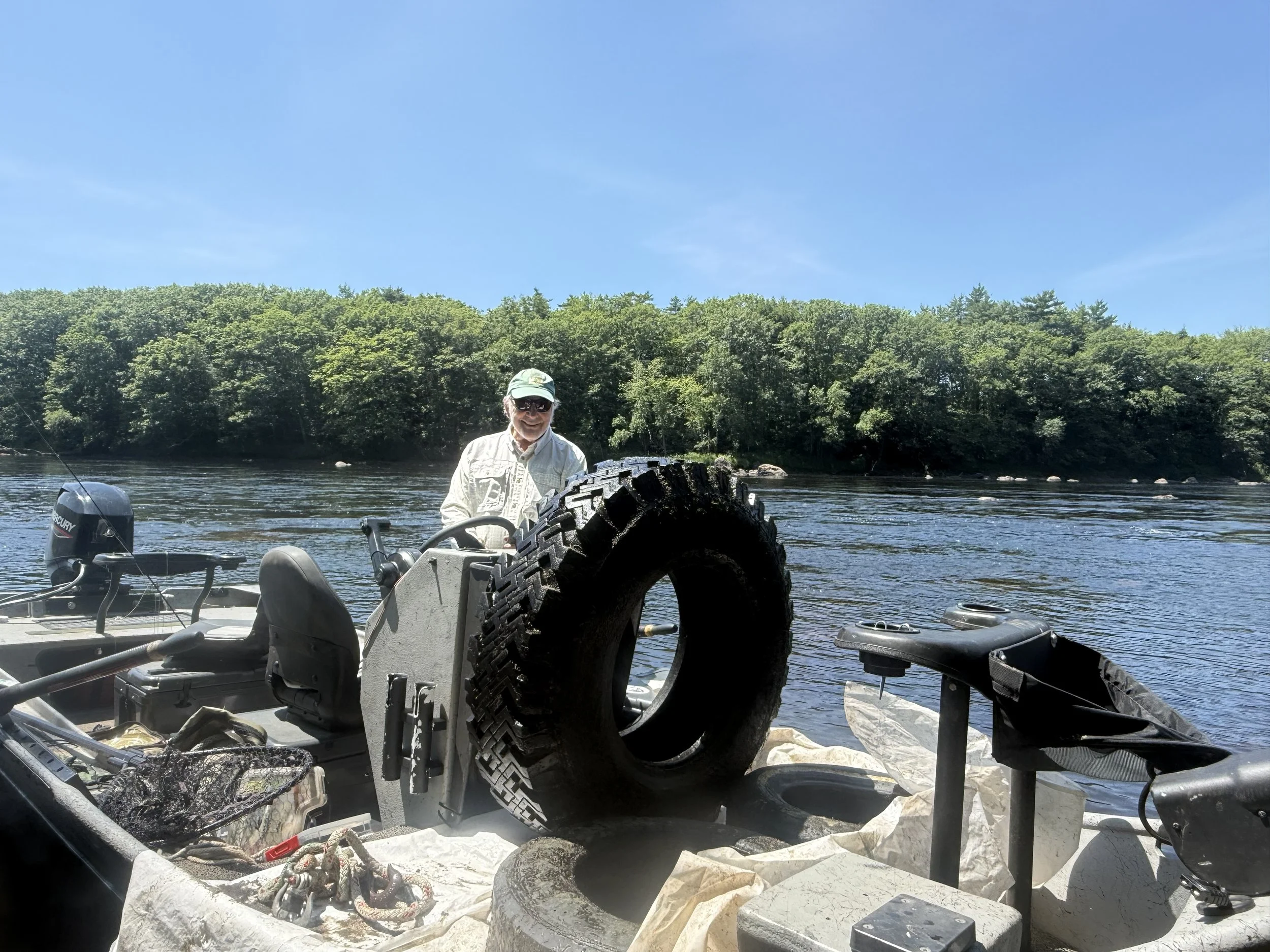
Every tire is pulled by hand from the river bottom, loaded into the boat, transported to shore, and taken for recycling. Whenever I encounter other trash while removing tires, I pick that up as well.
There are many wonderful organizations that organize river cleanups, collecting litter from shorelines and shallow water. I am grateful for the work they do.
This project is different.
Much of the tire removal requires locating submerged tires, diving or reaching them underwater, lifting them into the boat, transporting them to shore, and hauling them away for recycling. It's physically demanding work that requires significant time, equipment, and expense.
My goal is to continue removing these abandoned tires on a much larger scale, but I can't do it alone.
If you believe Maine's rivers deserve to be as healthy below the surface as they are above it, I hope you'll consider supporting this project.
Every donation helps keep me on the water, pulling another tire from the river.
Thank you for helping restore Maine's rivers—one tire at a time.
https://gofund.me/a9e16690e